Initial reception
Once you have arrived in Estonia, move to your destination. When you are in transit, continue to the bus station, port, or airport. If you plan to stay in Estonia, please apply for temporary protection as soon as possible. You can do this at the Police and Border Guard Board; read more. Before visiting the Police and Border Guard Board, please book an appointment; read more.
After applying for temporary protection, you will receive similar rights as Estonian residents – for example, the right to study and work and receive health insurance. ;
Applying for temporary protection is not obligatory. All citizens of Ukraine have the right to stay in Estonia even without applying for temporary protection.
After the initial procedures, further assistance to refugees is organised jointly by the state and local governments.
Information points
- Refugees arriving in Estonia receive initial advice and assistance from the workers of the border points. The state helpline 1247 (+372 600 1247) can be contacted 24/7 and the service bureaus of the Police and Border Guard Board during working hours.
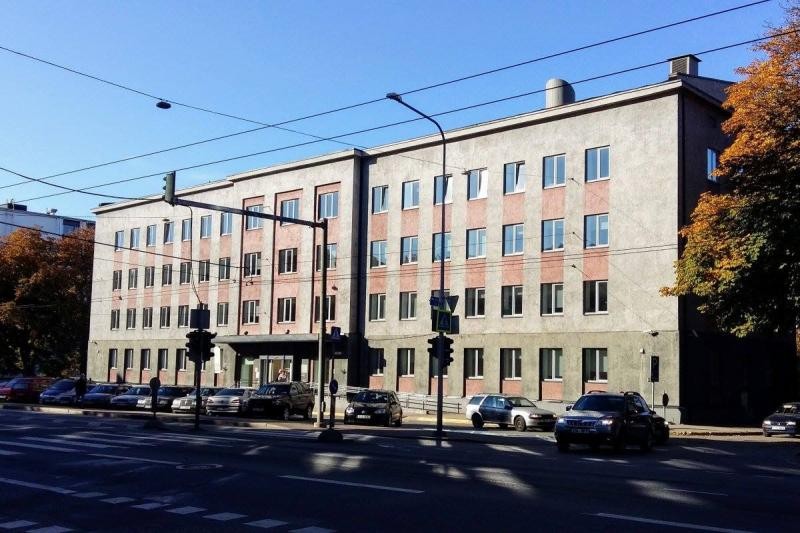
Tallinn Migration Centre supports residents of Tallinn with migration background
-
Endla 8, Tallinn, read more
- Online consultations, fresh information, on our official Facebook page
-
Opening hours:
Mon 9:00–18:00
Tue & Thu 9:00–17:00
Fri 9:00–16:00
Wed, Sat, Sun - closed
Lunch break 12:30–13:30
Contact numbers and reception hours:
Estonian and English language service:
Phone numbers: +372 5196 6614 and +372 5380 4841
Hours: weekdays from 9:00 AM to 12:30 PM and 1:30 PM to 4:00 PM
Ukrainian and Russian language service:
Phone number: +372 5385 9033
Hours: weekdays from 9:00 AM to 12:30 PM and 1:30 PM to 4:00 PM
If your call is not answered immediately, you will receive a callback!
Here's how we support residents of Tallinn with migration background:
-
we assess the primary need for help and provide it, as well as advise on issues of social help.
-
social welfare assistance
-
child protection issues, youth work, help and support for victims of domestic violence and torture.
-
different types of help with adaptation
-
practical assistance of coordinators (support persons)
-
information about services in the public sector
- close cooperation with ministries, state and city departments, non-profit enterprises, international organizations and diasporas
- free legal assistance on international protection issues in cooperation with the Estonian Center for Human Rights (pre-registration is required by phone +372 5385 9033)
- psychological help. Registration by telephone: consultations in Tallinn - 54200016 (Liliia Komissarova), consultations online - 5444 0784 (Irina Loginova)
There is an internet point and free wifi in the center.
OM (UN Migration Agency) offers the following services to migrants and refugees at the Tallinn Migration Centre:
- Voluntary return assistance for migrants who do not have the right to stay in Estonia or whose right to stay is ending, and who have decided to return to their home country
The IOM general contact number at the Tallinn Migration Centre is +372 5696 3776, iomtallinn@iom.int.
Registering your place of residence
When you have received a temporary protection and residence permit in Estonia, you must register your place of residence in the Estonian Population Register. You can do this in the local government of your residence. After registering your place of residence, you are entitled to services and benefits intended for Estonian residents, such as social benefits, health care, free public transport, or a place in a school or kindergarten.
NB! Registering a place of residence does not automatically grant tax incentives – in order to receive these, you have to get yourself determined an Estonian resident for tax purposes.
More information on registering your place of residence:

Health, medical care
Urgent medical aid is ensured to all persons staying in Estonia if they have a severe or life-threatening health issue -- even if the person who has arrived does not yet have a direct legal basis for being in Estonia.
Emergency medical and dental care, COVID-19 testing and vaccination, and healthcare services related to the protection of public health are guaranteed for Ukrainian war refugees who have been granted temporary protection.
Information to Ukrainian war refugees
(in Estonian, Ukrainian, English and Russian)
- Ukrainian war refugees arriving in the country can have free general health examination, which is carried out at the hospitals of the hospital network. During this health check, patients will undergo a general medical and infectious disease examination, are vaccinated if necessary, and the required prescriptions are issued.
During the medical examination, the medical condition of the war refugee is documented in their medical history. If necessary, the doctor refers the war refugee to a medical specialist and decides to continue the ongoing treatment and/or the treatment of chronic diseases.
Based on the medical history, it is also possible to determine the degree of disability of a disabled war refugee or refer a person to a family doctor/medical specialist for an additional appointment to determine the degree of disability. To register for the health check, the person will need to contact the hospital in the respective region directly: contacts. - The Family Doctor's Advice Line 1220 (+372 634 6630 when calling from a foreign phone number) is offering health advice in English and in Russian. If necessary, the person will be forwarded to the emergency line 112.
-
Ukrainian war refugees can address their health concerns (renewing prescriptions, chronic illnesses, other issues) at family health centres, the list of which is available on the website of the Health Insurance Fund: family health centres.
-
Pharmacies will also sell medicinal products, except for narcotic and psychotropic medicines, based on physical prescriptions issued in Ukraine. The pharmacist must be able to understand unambiguously what kind of a medicinal product has been prescribed to the person.
-
The Estonian state also funds the provision of treatment services provided to Ukrainian refugees in relation to HIV, tuberculosis, or the consumption of narcotic drugs. More information is available on the website of the Institute for Health Development.
-
Psychosocial crisis support is available at the information points and in the accommodation establishments. The crisis support telephone number 116 006 (+372 6147 393) is offering mental support: 24/7 in Estonian, English and Russian, every day from 16 – 20 in Ukrainian. There is also a possibility to arrange video counseling in Ukrainan. In addition, you can also chat online at www.palunabi.ee/en. Support is provided in Estonian, English and Russian.
-
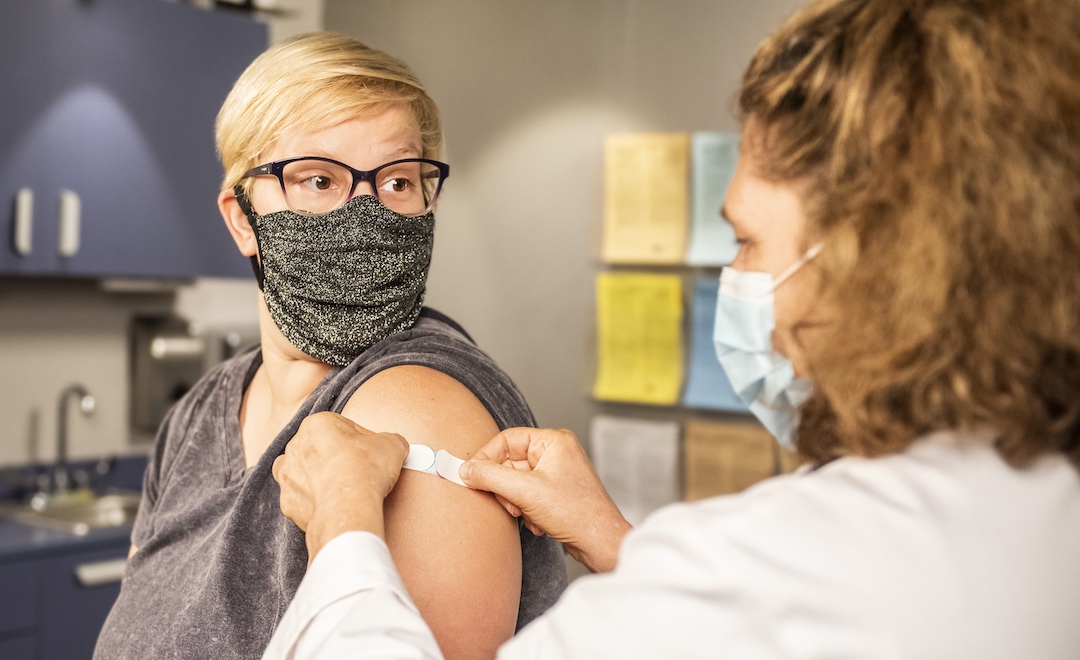
You should definitely get vaccinated against the COVID-19 virus. Vaccination is free of charge and over 75% of adults in Estonia are vaccinated against coronavirus. More information vaktsineeri.ee.
Purchase of medicines in Estonian pharmacies
You can seek advice on minor health problems and buy medicines, medical equipment, and other pharmacy goods in a pharmacy. A valid prescription is required for buying prescription drugs. You can use a Ukrainian paper prescription or an Estonian paper or digital prescription. Prescription drugs are not dispensed without a valid prescription.
In the case of a digital prescription, you must know the identification code created for the refugee or the Estonian personal identification code, on the basis of which the pharmacist can dispense the prescribed medicine to the person.
No personal identification or personal identification number is required for purchasing over-the-counter medicines and other pharmacy goods. If you have a health insurance, the state will partially reimburse the price of prescription medicines, but you have to pay for over-the-counter medicines yourself.
Please note that not all pharmacists speak English or Russian.
Ukrainian war refugee: coming to Estonia
The border crossing point:
- establishes the border crossing of people and a Ukrainian war refugee's wish to submit an application for temporary protection;
- establishes the final destination of a person's movement;
- accepts an application for international protection if necessary;
- gives information about staying in Estonia;
- organises the further movement of an unaccompanied foreign minor.
The Police and Border Guard Board recommends to not travel to Russia unless there is an urgent need. Ukrainian citizens have been granted temporary protection specifically to protect them from Russia's actions and travelling to Russia might bring about the revocation of one's residence permit.
Ukrainian citizens holding a biometric passport may travel to Estonia without a visa. Ukrainian citizens who are not holders of a biometric passport may travel to Estonia if they are war refugees or apply for temporary protection or international protection. The family members of Ukrainian citizens (children, parents, spouses) who are citizens of some other country and whose visa or other basis for stay has expired or is about to expire may temporarily remain in Estonia. Additionally, the Police and Border Guard Board can admit other arrivals, e.g. partners, from Ukraine to Estonia on humanitarian grounds, in order to maintain family unity.
No, it is not, unless the visa would be needed to visit a family member or for some other family reason. Starting from March 10, it is no longer possible to submit visa applications in the Estonian foreign representations and at the visa centres of outside service providers in the Russian Federation and Belarus.
All visas issued are valid until their expiration date. The Estonian foreign representations will definitely also continue accepting the visa applications of those Russian and Belarusian citizens who wish to come to Estonia to visit their family members, as well as for humanitarian reasons, like severe illness of a close relative or a funeral. NB! Starting from May, the Estonian head consulate in Saint Petersburg and representation in Pskov are closed.
The decision to end the admission of visa applications in Russia and Belarus is due to the technical issues with making visa fee and service charge payments, as well as other unexpected limitations that have to do with the current situation in Russia and Belarus.
It is not allowed to bring in cats, dogs and ferrets from shelters, breeders and other sources. The reason for that is the very high risk of the spread of rabies. Rabies is a disease that has no treatment.
Only pets that are with their owners are allowed to come from Ukraine to Estonia.
Ukrainian war refugee: staying in Estonia
Sending letters and postcards to Ukraine costs 1.90 euros. All the supplies necessary for sending a letter are available at post offices and customer service representatives will be happy to help you if you have any questions. You can find nearest post office here: Omniva > Locations and opening hours..
If you wish to send a parcel to loved ones who remain in Ukraine, you can do so for free.
To send a free parcel, go to a post office to complete the parcel card and customs form. The parcel may weigh up to 30 kg and must comply with the following requirements on dimensions: the longest side may be up to 105 cm or the sum of the longest side and the circumference of the bottom may be up to 2 metres. Perishable foodstuffs, fragile items, alcohol, and weapons cannot be sent. The maximum permissible value of the parcel is 70 euros.
No, the vehicles registered in Ukraine do not have to pass the roadworthiness test here in order to drive in Estonia. If the Ukrainian vehicles are in Estonia longer than one year, these vehicles have to be registered in Estonia and also pass the roadworthiness test here.
Estonian inspection stations can perform roadworthiness tests on vehicles registered in Estonia. It is not possible to perform a roadworthiness test in Estonia on vehicles registered in Ukraine or some other country. A roadworthiness test can be performed on a Ukrainian vehicle in Estonia if there is a wish to do so but legally this has no meaning and the inspection station cannot enter the roadworthiness test performed into the central system.
No, unfortunately she has to start the driving course from the beginning in Estonia, as finishing the course is a precondition for getting a driving license and driving school instruction is not mutually recognized between countries (not even between the member states of the European Union). However, the knowledge obtained in Ukraine will definitely help to do better at the driving course and the driving test in Estonia.
Other countries' citizens' children who were born in Estonia do not get the right to an Estonian nationality at birth. We recommend that mothers that are Ukrainian citizens and give birth here turn to the Ukrainian Embassy (+372 601 5815, Lahe 6, 10150 Tallinn) for matters related to the Ukrainian citizenship.
What status these children who are born in Estonia have depends on the legal basis on which the child's parents are staying in Estonia.
- if the parent have been granted temporary protection or she is going to apply for temporary protection, she will have to also submit a separate application for the child born in Estonia. A child is not automatically given temporary protection,
- if the parent holds a residence permit at the moment of the child's birth, the child also receives a residence permit and the parent has to the register the child's birth in the population register in order to get this. In this case, the parent only has to apply for a residence permit card for the child,
- if the parent holds a visa, she can apply for a visa for the child as well.
As the child's legal bases for stay depend of several different aspects, we recommend also contacting the migration consultants of the Police and Border Guard Board who will give advice and further instructions. You can find the contacts at politsei.ee
The Estonian Business and Innovation Agency is offering advice and support to all Ukrainian companies that wish to relocate to Estonia. The consultants assist with finding office space, a place to live, finding schools and kindergarten vacancies and, if necessary, help to organise transport between Estonia and the Ukrainian border. The contact information of the consultants can be found on the web page investinestonia.com (investinestonia.com/for-ukrainians)
Who to turn to if a pet that has come to Estonia from Ukraine needs medical help?
Veterinaries or animal clinics offer help to pets that need to be checked by a veterinary.
Urgent 24/7 veterinary assistance is offered by the following clinics:
- Rannamõisa PetCity clinic, phone 15 222 (Rannamõisa tee 8, Tallinn).
- The Small Animal Emergency Clinic, phone +372 502 3191 (Mustamäe tee 44-2, Tallinn).
- Small Animal Clinic of Estonian University of Life Sciences +372 731 3224 (during the day), +372 503 3878 (at night) (Kreutzwaldi 62, Tartu).
To get emergency care, it is definitely necessary to call ahead to the clinic and let them know what problem the pet has. It is also necessary to inform the clinic of the fact that the animal in question has come from Ukraine and is in quarantine (all dogs, cats and ferrets that have come with the Ukrainian war refugees remain in isolation in Estonia for at least 21 days). In that way, the clinic is better prepared.
The Estonian Society for the Protection of Animals helps with paying the bill for urgency medical care if you call +372 519 461 46´.
Different organisations are active in offering food aid and necessary equipment for pets. For instance, aid is offered by the Estonian Society for the Protection of Animals +372 519 461 46, info@loomakaitse.eu and the Estonian Kennel Union +372 534 990 80.
Last updated: 21.01.2026